
Iranian Construction Materials for Wholesale, Project Supply & Export
HKT Export and Hamed Khodabakhshi help international buyers source Iranian natural stone, ceramic and porcelain tiles, rebar, uPVC systems, cement, gypsum, dry mortar and construction chemicals with supplier verification, commercial RFQ control, quality documentation and export coordination.
Source Building Materials from Iran with Supplier Verification, QC and Export Coordination
Hamed Khodabakhshi and the HKT Export sourcing team work with international buyers looking for construction materials from Iran without wanting to depend on random supplier lists or fragmented introductions. The buying process starts with the real requirement: product category, specification, grade, dimensions, finish, quantity, destination, expected documentation, delivery timing and target commercial range.
Iran offers a broad industrial base for mineral, steel, ceramic, polymer and chemical construction products. HKT Export uses that breadth commercially: comparing qualified manufacturers, checking whether the requested specification is genuinely available, coordinating quotation and purchase, and keeping inspection, packing, customs and freight connected to the same transaction. The objective is not simply to locate a low price. It is to identify an Iranian source that can deliver the required material consistently and prepare it correctly for export.
International construction procurement becomes commercially useful only when the request combines origin, product, specification and buying terms. A buyer asking for Iranian rebar needs more than a country name: grade, diameter, tonnage, governing standard, mill documents, delivery term and destination all change the offer. A porcelain-tile inquiry becomes comparable when format, body type, finish, caliber, shade control, packing and quantity are defined. Gypsum, stone, cement, uPVC and construction chemicals require the same discipline.
Explore Iranian Construction Materials by Product Family
Jump to Iranian natural stone, slabs, tiles and cut-to-size project supply.
Jump to export-grade tile selection and wholesale project supply.
Jump to Iranian rebar sourcing with grade, certification and cargo planning.
Jump to uPVC pipe, valve and fitting packages for project buyers.
Jump to mill-based cement sourcing plus bulk and bagged logistics planning.
Jump to Semnan gypsum production, export logistics and wholesale sourcing.
Jump to ready dry mortar and export pallet handling.
Jump to admixtures, waterproofing and specialist technical products.
Iranian Natural Stone — Blocks, Slabs, Tiles & Cut-to-Size
HKT Export sources Iranian stone for architectural, facade and construction projects.
Iran has a long-established natural-stone sector with quarrying and processing activity across several provinces; Isfahan is widely recognized inside the trade as an important processing and commercial center. HKT Export treats origin and processor capability as commercial variables to verify rather than as slogans.
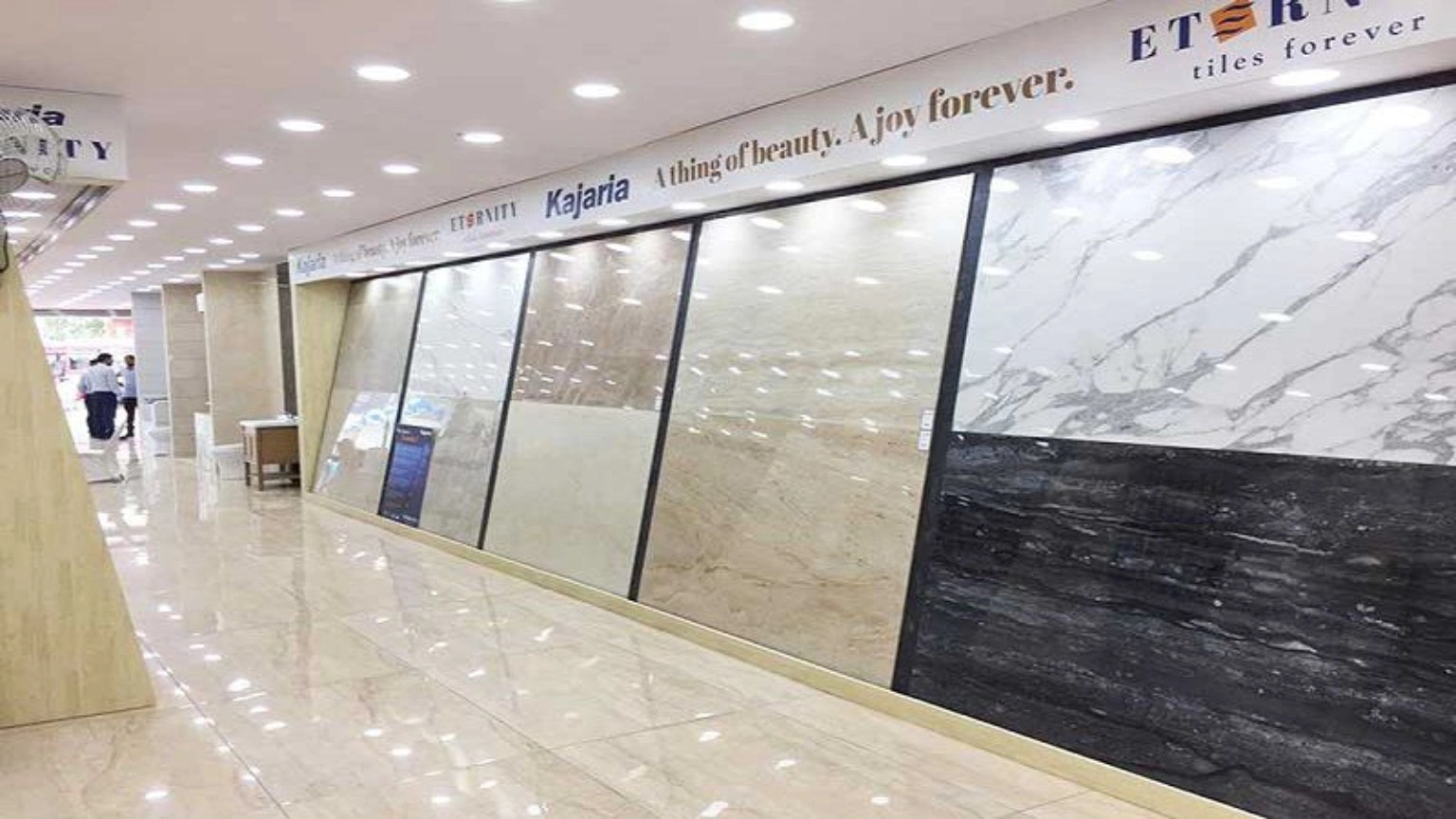
Iranian natural stone selected for premium projects through origin, finish and export suitability.
Hamed Khodabakhshi and the HKT Export team review quarry origin, finish, tone, thickness, fabrication quality and crate preparation so buyers receive commercially reliable stone from Iran.
Natural-stone procurement should begin with form and fabrication. Blocks, gangsaw slabs, polished or honed slabs, calibrated tiles, steps, risers, skirting and cut-to-size facade pieces cannot be priced or inspected as one generic product. The RFQ should identify stone name or approved visual range, finish, dimensions, thickness, edge treatment, reinforcement if any, tolerances, quantity by format and packing method.
For natural stone, sample approval should also define what variation is acceptable in the production lot. A small hand sample cannot show the full range of veining, background tone, fossils, resin filling or natural fissures that may appear across dozens of slabs. Project buyers should decide whether approval is based on a range board, slab photographs, dry-lay selection or another method. Book-matching, vein direction and sequential slab numbering should be stated when relevant. For cut-to-size work, the cutting list should be checked against raw-slab yield before final pricing, because low yield can materially change both cost and delivery quantity. These controls are particularly important for facade, lobby, hotel and high-visibility architectural projects where visual consistency matters as much as dimensional accuracy.
Project stone may be tested under ASTM, EN or destination-specific methods for properties such as absorption, density, flexural strength, compressive strength, abrasion or freeze-thaw resistance. The required method depends on the application and consultant specification. HKT Export therefore asks the selected quarry or processor for the current laboratory evidence that belongs to the actual stone variety and source being offered. A historic test for a different quarry bench, trade name or finish should not automatically be treated as proof for the order. Where the project requires a new test, sampling, laboratory identity and acceptance criteria should be agreed before production or fabrication is released.
A natural-stone order can pass through a quarry owner, block trader, slab processor, fabricator or export merchant, and those businesses do not create the same commercial result. For a block purchase, HKT Export looks at quarry access, current block selection, soundness and the seller’s ability to identify the material consistently. For slabs and cut-to-size work, the processor becomes equally important: sawing accuracy, resin and mesh treatment, polishing line, calibration, edge work, color sorting and packing discipline can change the usable value of the order. Current stock photographs, slab videos, block numbers and factory capability are therefore more useful than a generic claim that a supplier handles premium Iranian stone. The shortlist is built around the buyer’s format and project, so a processor that is excellent for commercial tiles is not automatically treated as the best source for large architectural slabs or precisely fabricated facade pieces.
Quality inspection for this category may include slab and tile shade consistency, cracks, resin filling, mesh backing, surface polish, edge damage, dimensional tolerance, thickness, warpage, visible repair, packing condition and quantity.
Natural stone: origin, block selection and fabrication control
Natural stone cannot be purchased safely by color name alone. Quarry origin, bench or production zone, block consistency, veining direction, resin treatment, filling, mesh backing and surface finish can all change the visual and mechanical result. For slabs and cut-to-size work, procurement should define thickness, dimensional tolerance, edge treatment, finish, acceptable natural variation and the method used to arrange pieces before packing. Mock-ups or dry-lay photographs are useful for projects where tone movement and vein direction matter. Fabrication quality should be checked separately from stone quality: a strong block can still become a poor project material if calibration, squareness, polishing or edge processing is uncontrolled. Export packing should protect corners and faces while allowing safe forklift handling and preventing movement inside the crate.
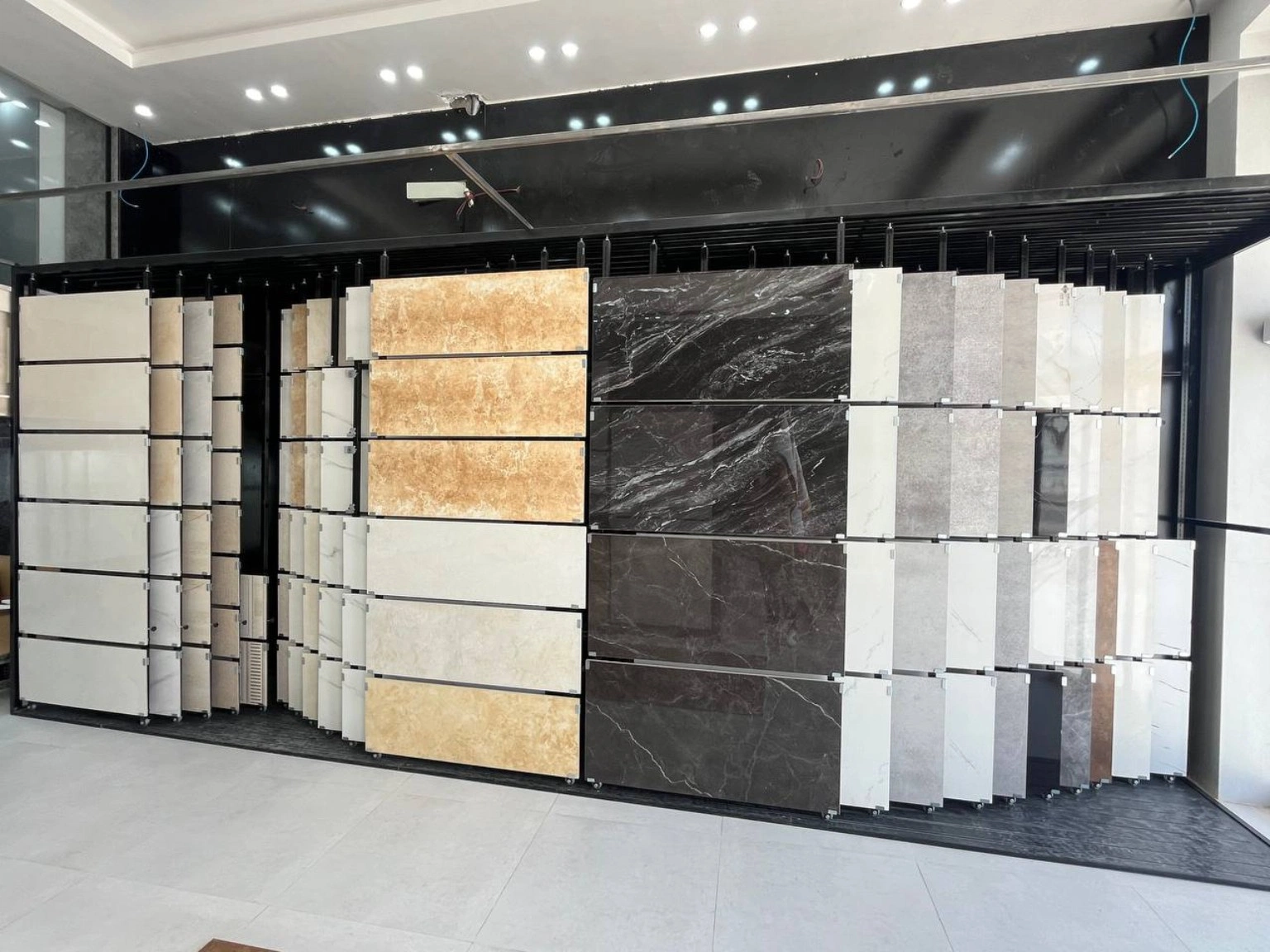
Stone slabs, tiles and cut-to-size material sourced with fabrication accuracy and project readiness in mind.
The HKT sourcing team compares processor capability, dimension control, visual consistency and packing strength so international contractors and traders can source project-ready Iranian stone.
heavy stone normally favors road or sea freight depending on destination, with container payload, axle limits, crate weight, center of gravity and unloading capability considered before dispatch.
Stone logistics are designed around weight, breakage risk and unloading method. Raw blocks can move as heavy individual units, while slabs normally require secure bundles or A-frames and tiles need reinforced crates that prevent edge impact and movement. Container payload can be reached quickly, so crate design and the number of square metres per load should be checked before production is complete. For distant destinations, sea freight through a suitable southern port can be practical; for neighboring markets, road transport may reduce handling. HKT Export also considers whether the destination has the crane, forklift or slab-handling equipment needed to unload safely. A beautiful material that arrives with broken corners, unstable crates or an impractical unloading plan is not a successful export. Packing drawings, weights and load sequence are therefore part of the stone purchase, not an afterthought.
International buyers typically need a commercial invoice, packing list and transport documentation, but the complete file can also involve certificate of origin, technical certificates, test reports, inspection records, product declarations, mill or batch documents and destination-specific paperwork. The required set depends on the material, buyer, route and country of import. HKT Export coordinates the Iranian side so product description, quantities, package count and shipment details remain consistent across the commercial and customs file. For Hamed Khodabakhshi, document preparation begins before the cargo reaches customs. Early coordination reduces the risk of last-minute description changes, missing technical papers or inconsistencies between packing and invoice data. The buyer or its customs broker should confirm destination requirements, while HKT Export keeps the supplier and export side aligned with that confirmed requirement.
For stone projects, Hamed Khodabakhshi and HKT Export connect the architectural brief with the Iranian quarry and processing chain. The work can begin with a named material such as a travertine or marble, or with a design request defined by color, movement, finish and budget. HKT can coordinate sample or range approval, current block or slab selection, processor quotation, cutting requirements, quality review, crate preparation and the export route. If the first source cannot hold the required visual range or production schedule, alternatives can be compared without changing the buyer’s procurement brief. This continuity is especially useful for facade and interior projects where appearance, fabrication and delivery must stay aligned. HKT’s role is commercial coordination and verification across the Iranian supply chain, while the quarry and processor remain responsible for producing the material they actually quote.
International buyers sourcing Iranian natural stone usually compare much more than color and headline price. Quarry origin, block selection, slab yield, visual consistency, thickness, finish, cut-to-size capability, reinforcement, packing method and inland logistics can all change the real commercial result. HKT Export helps architects, facade contractors, stone distributors, developers and project procurement teams compare Iranian stone suppliers against the actual project brief. A buyer looking for an Iranian natural stone supplier, an Isfahan stone processor, Iranian travertine, marble or granite for export can work through one commercial file instead of collecting unrelated quotations. Hamed Khodabakhshi and the HKT sourcing team coordinate supplier research, technical clarification, samples where required, commercial negotiation, inspection, packing and export planning so the selected material is matched to the destination, application and shipment method. The objective is to make Iranian stone easier to buy professionally: clear specification, credible producer selection, documented quality expectations and an export route designed before the cargo is ready.
Natural stone: project risk and value engineering
Value engineering in stone does not mean replacing a specified material with a visually similar stone without approval. A proper alternative is evaluated against appearance, absorption behavior, density, expected traffic, freeze-thaw exposure where relevant, staining risk, maintenance, available slab size and fabrication yield. The commercial comparison should also include waste percentage, crate weight, breakage exposure and replacement availability. For facade or high-visibility applications, reference samples should be retained so later production can be checked against the approved range. If a quarry has strong natural variation, the buyer may need a broader approved range rather than a single small sample. HKT Export can coordinate this process so the commercial decision includes both purchase price and the practical cost of installation, sorting and replacement.
Iranian Ceramic & Porcelain Tiles — Wholesale & Project Supply
Export-grade Iranian ceramic and porcelain tiles for distributors, contractors and project buyers.
Iran has a substantial ceramic and tile manufacturing base with long-running industrial clusters. For foreign buyers, factory capability, product classification and lot control matter more than generic claims about being “first grade.” HKT Export translates the project requirement into verifiable purchasing criteria.

Ceramic and porcelain tiles sourced as export-grade products with controlled shade, caliber and packing.
Hamed Khodabakhshi and the HKT commercial team align product code, finish, packing and relevant documentation so tile buyers receive material suited to trade, project or distribution use.
Tile procurement starts by defining the product body and the exact commercial mix. Porcelain floor tile, glazed ceramic wall tile, glazed porcelain, rectified formats, matt or polished surfaces, decorative ranges and outdoor products can have different factories, test results and packing density. A useful RFQ lists size, thickness, surface, rectification, intended use, quantity by SKU, acceptable shade or caliber policy, cartons per pallet and any required test classification.
Mixed-SKU containers also need a loading plan because a catalogue with many attractive models is not the same as a factory schedule that can produce the requested quantities together. HKT Export organizes the range before quotation so price, production batch and packing can be compared without hiding differences behind one average figure.
For tile orders, production-lot discipline can matter as much as the catalogue design. A distributor may accept normal commercial shade variation, while a project may require tighter control across one floor, elevation or room set. The RFQ should therefore identify whether cartons from different lots can be mixed, how caliber is marked, whether replacement quantities should be reserved and how many square meters are needed as attic stock or future maintenance stock. Large formats also change pallet geometry and breakage exposure. A commercially attractive price on 600×1200 porcelain can lose its advantage if the packing is weak, the pallet count is inefficient or replacement cartons cannot match the original batch. HKT Export uses these points to make the production and shipment plan part of the purchase decision rather than an afterthought.
International tile specifications commonly reference ISO 13006, EN 14411 and test methods from the ISO 10545 series, but the buyer should verify the classification and report for the exact factory and product code. Water absorption, breaking strength, abrasion, slip performance, chemical resistance or frost resistance can be relevant depending on use. HKT Export requests the available declaration, test report and technical sheet and checks that the quoted body type, format and intended application match those documents. A certificate for one tile series should not be silently extended to another finish, thickness or production body without producer confirmation.
Tile sourcing begins by identifying the factory and the exact production line behind the model. Two Iranian suppliers can both advertise porcelain or ceramic while offering different body types, firing technology, rectification, thickness, surface quality, face variation and packing. HKT Export therefore reviews the model code, factory identity, current production status, available sizes and the technical sheet before treating quotations as comparable. For distributors, continuity matters as much as the first container: a model that is being discontinued or produced only intermittently may be a poor choice for repeat stock. For project buyers, shade and calibre control can be more important than catalogue breadth. A factory with a disciplined export packing line, clear pallet data and responsive model documentation can be commercially stronger than a seller with a larger online catalogue but weak batch control.
Ceramic and porcelain tiles: performance before decoration
Tile selection should begin with body type and intended use, then move to design. The RFQ should state whether the material is ceramic or porcelain, glazed or unglazed, polished or matt, rectified or non-rectified, and whether the application is wall, residential floor, commercial floor, exterior zone, wet area or another defined environment. Relevant checks may include water absorption, breaking strength, abrasion behavior, surface quality, dimensional consistency, warpage, shade and caliber control, chemical resistance or slip performance when these are important to the project. A decorative pattern is not a substitute for technical suitability. Large-format tiles require extra attention to flatness, packaging, handling and installation planning because a small production or substrate deviation becomes more visible as the tile size increases.
Tile shade, caliber and packing discipline
For large tile orders, shade and caliber management is often more important than the nominal catalog code. Cartons should be checked for consistent identification, and pallets should be organized so installers do not unknowingly mix incompatible production lots. Sample approval should specify whether the sample is a design reference only or also a shade reference. Where visual continuity is critical, production should be photographed under consistent lighting and carton labels recorded. Packing must be strong enough for the route: export pallets need stable strapping, corner protection and moisture-resistant wrapping without trapping water inside. Container loading should avoid point loads and unstable stacking. A damage allowance should be discussed commercially rather than hidden, because realistic spare quantities protect the project schedule when cutting and site breakage occur.

Tile wholesale and project supply coordinated around factory capability, SKU mix and export practicality.
The HKT sourcing team helps distributors and contractors evaluate supply continuity, pallet structure, destination needs and commercial viability before confirmation of the order.
tiles are dense and weight-limited cargo; container planning should optimize pallet footprint and payload without creating unsafe stacking or unnecessary breakage risk.
Ceramic and porcelain tiles combine high weight with a brittle finished surface, so pallet design and handling are central to the freight plan. The number of boxes per pallet, square metres per container and gross payload should be calculated from the selected size and body rather than from a generic loading table. Large formats such as 600×1200 mm need stronger packaging and careful forklift handling, while 600×600 mm can offer more flexible mixed-model loading. HKT Export checks whether the factory accepts mixed containers within the same body or production family and how that affects minimums. Sea freight through Bandar Abbas is common for long-distance orders, while road or rail can suit regional markets. The practical objective is to maximize useful sellable square metres without increasing breakage, overloading the container or creating a pallet pattern that the destination warehouse cannot handle.
Frequent risks in this category include mixing shade or caliber lots, buying only from catalogue images, ignoring pallet strength, ordering too many low-volume SKUs, failing to reserve spare quantity for future replacement and treating nominal size as if it were the only dimensional requirement.
For tile buyers, HKT Export can manage the sequence from model search to shipment rather than stopping at a catalogue link. Hamed Khodabakhshi can coordinate shortlist creation by size and finish, sample boxes, technical sheets, current production confirmation, distributor or project quotation, private-label questions, batch review and loading information. When a buyer needs several designs, the commercial discussion also includes how many models can be combined without violating factory minimums or body compatibility. If a project requires later phases, HKT can ask the factory about production continuity before the first order is placed. The result is a purchasing file that links the model the buyer approved to the cartons, pallets and documents that leave Iran, reducing the common risk that the commercial order drifts away from the sample or catalogue selection.
Foreign distributors, contractors and project buyers sourcing ceramic and porcelain tiles from Iran usually need consistency across size, shade, calibre, surface finish, water absorption, packaging and repeat supply. HKT Export compares Iranian tile manufacturers and export-ready suppliers according to the buyer’s target market rather than treating every catalogue as commercially equivalent. Buyers looking for an Iranian ceramic tile supplier, porcelain tile exporter from Iran, Yazd tile manufacturer or Isfahan tile source can define the required format, finish, grade, quantity, pallet configuration and documentation before quotations are compared. Hamed Khodabakhshi and the HKT sourcing team keep product selection connected to inspection, packing, container payload and freight economics. This is especially important for wholesale and project orders where a small difference in carton count, breakage allowance, shade consistency or pallet design can materially affect landed cost. The commercial aim is a tile program that is repeatable, exportable and suitable for the buyer’s distribution or construction plan—not simply the lowest ex-factory price.
Tile procurement references: Takceram and Alborz Ceramic
When the buyer requests named Iranian tile manufacturers, the supplier reference must be explicit in the RFQ and purchase order. HKT Export can work with product selections from Takceram official website and Alborz Ceramic official website, subject to current production, model availability and project approval. The brand name alone is not enough: model or collection, size, thickness, surface, finish, shade reference, rectification status, quantity per carton and pallet configuration should be frozen before order. For project work, replacement stock and later-phase continuity should also be considered because an exact decorative batch may not be reproducible indefinitely. Any substitution should require written buyer approval.
Iranian Reinforcing Steel & Rebar — Grades, Mill Documents & Export Supply
Hamed Khodabakhshi sources Iranian reinforcing steel with mill documentation matched to the project.
Iran has a large steel industry and Isfahan is a major industrial and steelmaking region. HKT Export positions rebar sourcing as a documented engineering purchase: grade, standard, mill identity, heat traceability and loading plan are defined before shipment.
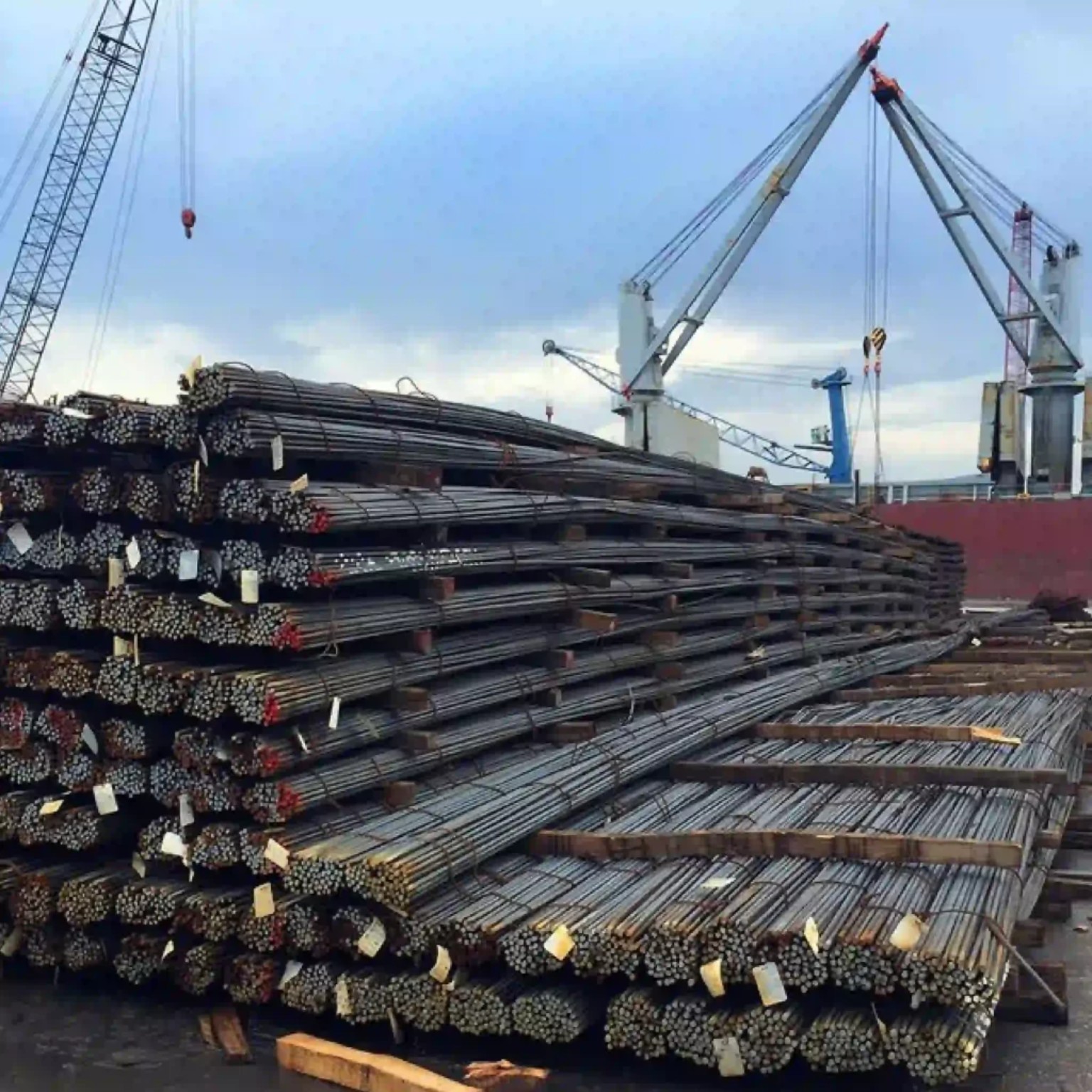
Iranian rebar sourced as a documented construction material with grade, certification and cargo control.
Hamed Khodabakhshi connects mill certificate, governing standard, heat traceability and loading logistics so reinforcing steel purchases from Iran stay technically and commercially dependable.
Rebar procurement begins with a schedule, not the word steel. The buyer should define governing standard, grade, nominal diameters, quantity by diameter, bar length or coil requirement where applicable, mill-document expectations, bundle identification and destination. Current rolling programs matter because an Iranian mill may have excellent capability without every diameter being available in the same production window.
For rebar, traceability and weight basis should be agreed before tonnage is treated as final. The buyer may purchase by theoretical weight, actual weighbridge weight or another contractual basis depending on the market and mill practice. Bundle tags, heat numbers and mill certificates should connect the physical cargo to the documents, especially when several diameters or heats are loaded together. Bar length also affects route planning: long straight bars can create different truck, container or port-handling constraints from shorter lengths or coils. A project schedule should therefore link diameter mix, required delivery sequence and site unloading capability. This allows HKT Export to compare not only the mill price per ton, but also the practicality of delivering the specified steel in the order the construction program needs it.
Rebar supply can come directly from a mill, from mill-linked export channels or from available stock held by steel traders. A direct mill campaign can suit large tonnage and defined grades, while stocked material can be faster for certain sizes but requires careful heat, tag and certificate matching. HKT Export checks the actual producer, grade, diameter range, standard, available tonnage and Mill Test Certificate before comparing price. A trader offering B500B, A500C or A3 must be able to connect the cargo to the correct mill documentation rather than only repeat a grade name in the quotation. Production schedule also matters: a low mill price is less useful if the required diameter is not planned within the project window. Supplier qualification therefore combines commercial availability with traceable technical evidence.
HKT Export’s value in rebar sourcing is to keep the technical grade, live market quotation and shipment basis tied together. Hamed Khodabakhshi can coordinate a buyer RFQ by diameter and tonnage, request mill offers, collect MTCs, clarify whether local A3/A4 designations or export grades such as B500B/A500C meet the stated standard, and arrange inspection when required. The buyer can then compare offers on the same Incoterm and validity date. If the project schedule changes, HKT can check stock alternatives or another mill without silently changing the grade. That continuity is important in a volatile steel market: the commercial relationship remains stable even when the mill, loading date or freight option must be reevaluated.
International buyers sourcing reinforcing steel from Iran typically compare grade, diameter range, bundle weight, rolling mill, production standard, mill test certificate, chemical and mechanical properties, quantity tolerance and shipment format. HKT Export helps buyers evaluate Iranian rebar suppliers and Isfahan-area steel sources against the engineering and commercial requirements of the order. A request for Iranian rebar, A3 or A4 reinforcing steel, construction steel from Iran or an export mill source should be tied to a clear specification and current mill documentation before price becomes the deciding factor. Hamed Khodabakhshi and the HKT sourcing team coordinate supplier checks, quotation comparison, documentation review, loading preparation and export logistics so the steel ordered and the steel shipped remain commercially traceable. For heavy cargo, payload, inland trucking, port or border routing and bundle configuration can change the economics significantly, so freight planning is considered alongside the purchase rather than after it.
Reinforcing steel: grade, heat traceability and bundle identity
Rebar procurement should link each supplied bundle to a declared grade and production trace. The purchase order should define diameter range, bar length, surface type, relevant mechanical requirements and the documentation expected from the mill or supplier. Heat or batch references, bundle tags and weight records are essential when the buyer must demonstrate traceability. Visual inspection should confirm bar condition, obvious corrosion, severe deformation, mixed diameters or damaged bundle identification before loading. Weight comparison should be based on an agreed method rather than rough visual estimation. For project cargo, the documentation package should be prepared before dispatch so certificates, packing list and commercial invoice describe the same grade and quantities. Unapproved source substitution should be prohibited where the project has named or prequalified mills.
Rebar commercial comparison and logistics
A rebar quotation must be compared on more than price per tonne. The buyer should check whether price is theoretical or actual weight, whether cutting is included, bundle size, minimum order by diameter, loading method, inland haulage, export handling and documentary costs. Long bars can create transport constraints that do not appear in the factory price. The shipment plan should therefore be coordinated with truck, container or breakbulk limitations at an early stage. For mixed-diameter orders, loading sequence can be arranged so the destination warehouse can unload efficiently. Where the project uses phased deliveries, the commercial agreement should define how later lots will be matched to the approved grade and how any change in source must be communicated before production.
Iranian uPVC Pipes & Fittings — Pressure, Drainage & Project Systems
Premium Iranian uPVC pipe and fittings sourced around the application—not a generic product list.
Iranian manufacturers serve multiple plastic-pipe and building-services segments. HKT Export focuses the inquiry on the actual use case because a pipe that looks correct can still be commercially wrong if pressure class, dimensional system, jointing method or destination certification is mismatched.

uPVC pipe and fitting systems sourced according to the real building or infrastructure application.
The HKT sourcing team coordinates diameter, class, joint type, fitting family, documentation and packing so export buyers receive a coherent pipe system rather than unrelated items.
uPVC sourcing should be designed around the piping system and application. Pressure-water pipe, non-pressure drainage, sewerage, conduit and building services do not share one specification, even when the material is all called uPVC. The RFQ should state application, outside diameter, pressure or stiffness class, wall or series requirement, pipe length, socket and joint type, fitting list, valves or threaded transitions, marking and packaging.
For uPVC systems, completeness is a commercial requirement. A project can be delayed by a missing reducer, adaptor, valve or transition fitting even when the main pipe is available. The buyer should therefore provide a bill of quantities by diameter and fitting code, together with the intended jointing method and any interfaces with metal, pumps, tanks or other piping materials. Pressure-pipe orders may also require attention to temperature assumptions and service conditions because nominal pressure classes are linked to defined test and operating conditions. For drainage systems, stiffness, socket fit and installation geometry can be more relevant than pressure. HKT Export reviews the package as a system so the quotation exposes missing components before shipment and the buyer can decide whether to source a complete range from one producer or combine compatible sources under controlled specifications.
For pressure-water applications, buyers may reference the ISO 1452 series or a destination-specific equivalent, while drainage, sewerage, conduit and building-services systems can fall under different standards. ISO 1452 is itself in revision, which makes order-specific document checking more important than copying an old standard number into a catalogue. HKT Export asks the producer to identify the exact standard, part, pressure or stiffness classification and test basis for the pipe and fittings offered. Certificates for pressure pipe should not be used as blanket evidence for non-pressure applications, and the complete system should be checked for compatible joints, fittings and markings.
A credible uPVC source should be evaluated as a pipe-and-fitting system producer, not only as an extrusion line. HKT Export reviews the diameter range, pressure or stiffness classes, socket design, available fittings, injection-moulding capability, marking and the standards the factory actually documents. A producer may be strong in pressure water pipe but have a limited drainage fitting range, or vice versa. For project orders, that difference can create gaps in the bill of quantities. Current datasheets, dimensional tables and fitting lists are therefore used to screen factories before price comparison. HKT also checks whether the requested product is standard production or requires a special run, because a technically possible diameter can still carry a higher minimum quantity or longer lead time than the buyer expects.
Quality inspection for this category may include dimensions, wall thickness, socket geometry, visual finish, color consistency, marking, packaging, fitting completeness, metal-thread insert quality where used, sampling for pressure or impact tests when required and quantity by diameter.
uPVC pipes and fittings: system compatibility instead of isolated items
Pipe procurement is safer when treated as a system. The RFQ should identify application, nominal diameter, wall or pressure class, joint type, pipe length, fitting schedule, gasket requirement and any project-specific certification. Drainage pipe, pressure pipe and electrical conduit serve different duties and should not be treated as interchangeable because their dimensions and performance expectations differ. Fittings must match the pipe system, and a low-cost fitting that does not fit consistently can create far more site cost than the saving in purchase price. For exports, socket ends and pipe edges require protection against crushing and impact. Bundling should allow counting and inspection, while fittings should be carton-labeled by code and quantity. A complete package also includes solvent, seals or accessories only when specified and compatible.
Louleh Gostar Khademi uPVC products — HKT Export sales representation
For buyers requesting a named Iranian uPVC source, HKT Export represents the sales channel for products of Louleh Gostar Khademi — official website. The manufacturer produces PVC-U/uPVC pipes and fittings as well as related polymer piping products. Commercial offers remain project-specific: the RFQ and quotation should identify application, diameter, pressure or stiffness class, wall or series requirement, joint and socket type, fitting schedule, pipe length, marking, packing and any destination certification. Brand nomination does not replace technical approval; the exact item code, current datasheet, production availability and batch documentation should be confirmed before purchase and shipment.
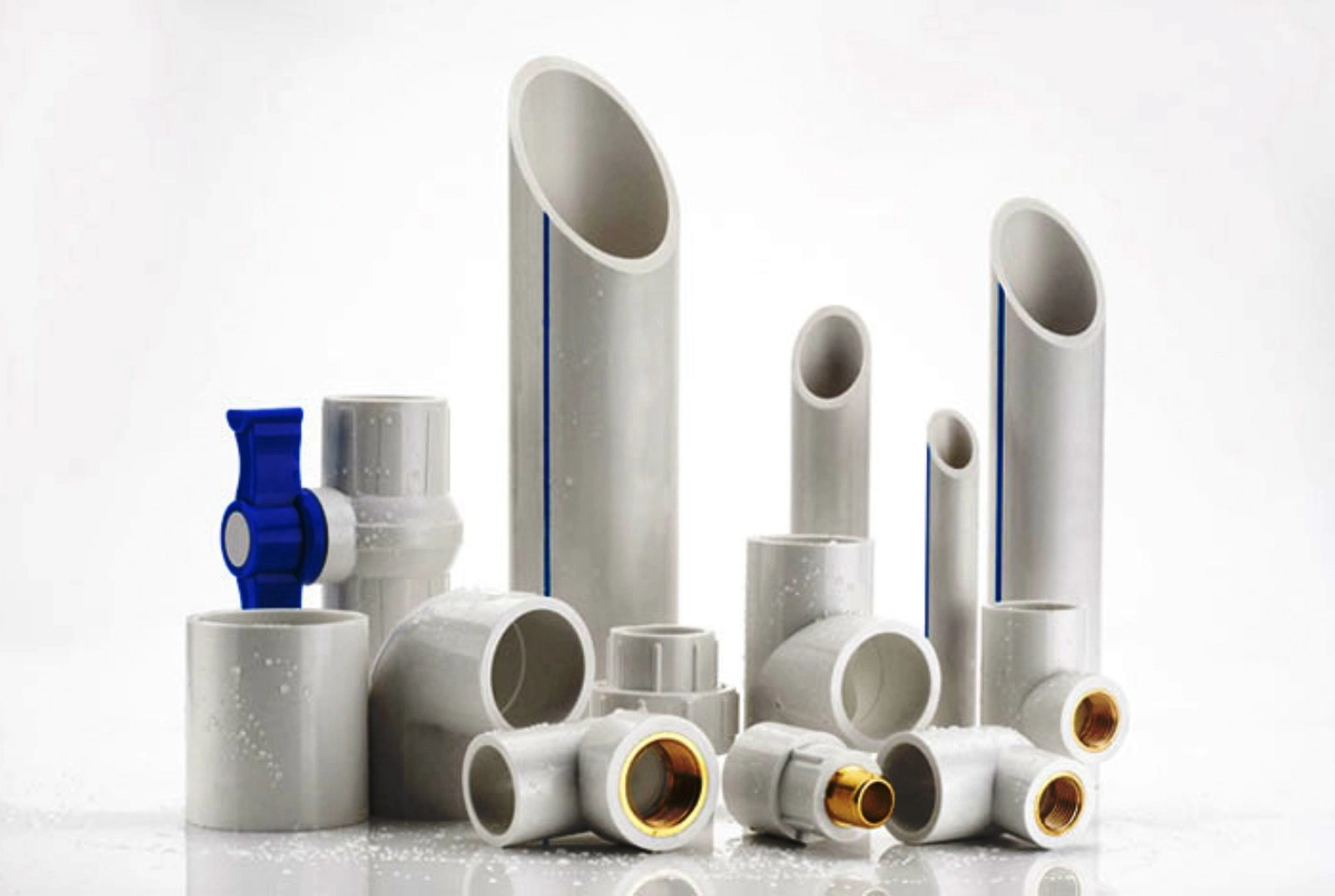
Pipe, valve and fitting packages coordinated as one project-specification system for export buyers.
Hamed Khodabakhshi and the HKT commercial team verify dimensions, application, accessory compatibility and container planning so project buyers can source a complete, better-organized package.
uPVC cargo is comparatively light for its volume, making container utilization and dimensional planning important. Road freight may suit regional markets while sea freight is practical for distant full-container orders.
uPVC creates the opposite freight problem from steel: volume often becomes critical before legal payload. Long pipe lengths occupy container space quickly, so nesting smaller diameters inside larger ones can improve utilization when product design and handling permit. Sockets and exposed ends need protection so the loading method does not create deformation or impact damage. Fittings are usually boxed or bagged and can be placed around the pipe load if the arrangement remains secure and easy to count. HKT Export reviews container type, pipe length, nesting plan, package count and destination unloading method before finalizing freight. Regional road transport can be attractive for neighboring markets, while sea freight suits longer routes. The best plan is the one that preserves system integrity while reducing the amount of paid empty volume.
Frequent risks in this category include confusing pressure and drainage systems, specifying only diameter without class, mixing incompatible joint systems, buying fittings from a different dimensional system, weak carton labeling and using generic product photos instead of approved item codes.
For uPVC projects, Hamed Khodabakhshi and the HKT Export team can convert a project BOQ into a supplier-ready schedule, then keep the pipe, fittings and documents synchronized. The process may include technical clarification of pressure class or application, factory comparison, datasheet collection, sample or dimensional approval, fitting availability checks, packing review and export coordination. If one factory cannot provide the full fitting range, HKT can identify the gap before purchase rather than after installation begins. The aim is to supply a coherent system package from Iran, not merely a container of pipe lengths that forces the buyer to search elsewhere for compatible components.
Buyers of Iranian uPVC pipes and fittings normally need a system that matches the intended application, pressure or non-pressure use, diameter range, wall thickness, connection method, fitting compatibility, packing and destination requirements. HKT Export works with international distributors, contractors and project buyers to turn a general inquiry for uPVC from Iran into a defined commercial specification. A buyer looking for an Iranian uPVC pipe supplier, PVC pipe exporter, plumbing-material source or uPVC fittings manufacturer can compare qualified producers on the same technical and commercial basis. Hamed Khodabakhshi and the HKT sourcing team coordinate manufacturer communication, product documentation, sample or inspection requirements, packing and freight planning. Because low-density pipe products can consume container volume quickly, loading layout and product mix are also commercial variables. The goal is to source a compatible product family with dependable dimensions, fittings, packaging and export execution rather than buying isolated items that create problems during installation or distribution.
Iranian Cement & Clinker — Bulk, Bagged & Export Supply
HKT Export sources Iranian cement for infrastructure, distribution and construction buyers.
USGS reported about 70.7 million metric tons of cement production in Iran in 2024 and about 13.1 million metric tons of cement and clinker exports. Major reported destinations included Iraq, Kuwait, Afghanistan, Russia and Pakistan. HKT Export uses that industrial scale as a sourcing opportunity, while still verifying the specific plant, product and shipment for each transaction.

Iranian cement sourced through plant, type, freshness, packing and commercially workable export routes.
The HKT sourcing team compares mill availability, cement type, document readiness, bagging and freight economics so buyers can procure Iranian cement with better market confidence.
Cement procurement should first separate cement from clinker and identify the required delivery form. Bagged Portland cement, big bags, bulk cement and clinker have different loading equipment, storage conditions, payload economics and buyer infrastructure. The RFQ should state the applicable cement standard or class, required test certificate, bag or bulk format, quantity, packing date expectations, destination, unloading capability and shipment schedule.
Large orders may also need staged production and vessel or truck planning. HKT Export compares mills only after those commercial conditions are clear, because a nominal factory price can be misleading when one offer includes suitable packing and current laboratory documentation while another assumes a different cement class or delivery system.
For cement and clinker, timing and storage can materially affect the transaction. Buyers should define whether production date or maximum age at loading matters, how bags will be protected from humidity, whether pallets are required and how long cargo may wait at a warehouse, border or port. Bulk shipments need compatible loading and receiving equipment, while bagged cargo needs realistic handling labor and moisture protection at destination. Strength class alone is also not enough: the buyer may need limits for sulfate, alkali, chloride or other chemistry depending on concrete design and local rules. HKT Export can organize the commercial file so the mill certificate, production lot, packing date and shipment window stay connected, reducing the risk that technically acceptable cement is weakened commercially by unsuitable storage or delayed logistics.
Cement contracts may use ASTM C150 type designations, EN 197-1 classes or destination-specific national standards. These systems are not interchangeable labels, and a buyer should not assume that every Iranian mill produces every type or class continuously. HKT Export checks the current mill certificate and the specific test values requested by the buyer, such as strength development, fineness, setting time, soundness or chemical limits where relevant. For clinker, the required chemistry and intended grinding use need their own specification. The accepted standard and certificate date should be part of the purchase file before shipment planning begins.
Cement sourcing is strongly tied to the actual mill and loading method. HKT Export distinguishes between producers that can support bagged export, jumbo-bag loading, bulk cement or clinker and reviews the exact product type and current mill documentation. A bagging line designed for domestic distribution may not automatically meet an importer’s requirement for stronger export bags, neutral printing or palletization. Bulk transactions introduce a different capability question: silo availability, loading rate, terminal access and the ability to coordinate vessel documentation. The supplier shortlist therefore depends on whether the buyer needs retail-ready bags, industrial jumbo bags, bulk cement or clinker. Mill reputation alone is not enough if the factory cannot execute the required export format within the shipment window.
Cement and clinker: type, freshness and moisture control
Cement offers should identify product type, producer, packing format, nominal bag weight or bulk arrangement, production timing and the performance documentation available for the lot. Freshness matters because prolonged or damp storage can affect handling and performance. Bags should be checked for hardening, torn packaging and unclear coding before loading. For bulk supply, silo cleanliness and loading discipline matter. Clinker procurement requires a different commercial view: chemistry, grindability expectations, cargo size, loading rate, port conditions and moisture exposure can drive the economics. A low ex-works price can be neutralized by inefficient inland movement or port delays. HKT Export therefore separates product qualification from logistics modeling so buyers can compare delivered cost rather than only factory price.

Bulk and bagged cement options planned around loading, moisture protection and destination logistics.
Hamed Khodabakhshi and the HKT commercial team coordinate factory supply, format selection, loading method and freight route so cement reaches the buyer in the right commercial form.
cement is heavy and freight-sensitive; commercial feasibility depends strongly on distance, road access, port economics and whether the destination can receive bulk, bagged or big-bag cargo efficiently.
Cement and clinker are heavy, freight-sensitive commodities. Bagged material can move in containers or trucks, jumbo bags can support containerized qualification or regional orders, and larger clinker or bulk cement programmes may require vessel logistics. Moisture protection is essential for bagged product, while bulk loading requires careful coordination of terminal, vessel and discharge assumptions. HKT Export compares the inland distance from mill to the selected port or border, packing weight, container payload and freight term before the buyer treats the factory price as the real cost. Bandar Abbas or Bandar Imam can be relevant depending on mill location and route, but the named port should follow the actual logistics plan. For bulk movements, loading windows, vessel nomination and port conditions belong in the contract, not in a late email after production is ready.
Frequent risks in this category include quoting cement without governing standard, ignoring production date, assuming every named plant has every type ready, moisture exposure, poor bag quality, underestimating inland freight, mixing lots without traceability and choosing a route whose freight erases the apparent ex-works price advantage.
HKT Export coordinates cement and clinker as an industrial commodity purchase rather than a catalogue product. Hamed Khodabakhshi can request mill quotations tied to product type, quantity, packing and Incoterm, collect current mill certificates or chemical data, compare bagging options, and connect the selected mill to inland transport and port handling. For a trial order, the process may begin with a container or jumbo-bag shipment; for a recurring buyer, it can develop into a larger programme. HKT does not manufacture the cement and does not invent a fixed export price. Its role is to keep the producer, quality file and shipping structure aligned so the buyer can make a current, defensible purchase decision.
Iranian cement is purchased internationally for infrastructure, distribution, ready-mix, precast and general construction applications, but a dependable order requires more than naming a cement type. Buyers typically need to confirm producer, cement classification, current mill test data, bag or bulk format, bag weight, production date, quantity, loading method, destination requirements and freight route. HKT Export can compare supply from established Iranian cement producers, including Tehran and Abyek-area options when suitable for the inquiry, according to current availability and the buyer’s specification. Hamed Khodabakhshi and the HKT sourcing team coordinate commercial quotation, technical documents, packing, loading and export logistics so the order is not separated from the realities of transport. A foreign buyer searching for an Iranian cement supplier, Portland cement exporter from Iran, bagged cement source or clinker and cement trading partner needs current factory confirmation rather than a generic promise. HKT Export therefore treats each order as a live procurement file with technical and commercial verification before commitment.
Nonconformity handling and replacement strategy
A useful purchase contract defines what happens when material does not meet the approved specification. The process should distinguish cosmetic variation, repairable defect, quantity shortage, documentary deficiency and technical nonconformity. Evidence should be collected before material is installed or mixed, because later investigation becomes harder. For fragile materials, the claim procedure should separate transit damage from manufacturing defect. The commercial solution may be replacement, credit, sorting, rework or another agreed disposition. Replacement lead time matters as much as compensation when the material is on a project critical path. HKT Export keeps product, batch, packing and loading records so a claim can be traced to a defined shipment rather than argued only through photographs without context.
Iranian Gypsum — Raw Rock, Powder, Plaster & Bulk Supply
HKT Export sources Semnan gypsum for international construction and distribution buyers.
USGS identifies Semnan as Iran’s leading gypsum-producing province and estimated its gypsum production capacity at more than 16 million metric tons per year. USGS also reported about 2.3 million metric tons of Iranian gypsum exports in 2024, with the UAE, India and Kuwait among the major destinations.

Semnan gypsum sourced through production quality, bagging discipline and fit for the buyer’s end use.
The HKT sourcing team aligns gypsum form, fineness, application need and packing protection so buyers can source Semnan material with better practical and commercial clarity.
Gypsum procurement depends on the intended end use. Natural gypsum rock, processed gypsum powder, construction plaster and application-specific grades can differ in purity, fineness, setting behavior, whiteness, moisture and packaging. A serious RFQ should identify product form, target chemistry or physical performance where specified, mesh or particle-size expectation, bag weight, quantity, destination and whether an independent sample or certificate is required.
Semnan is an important sourcing origin, but origin alone does not define a usable product. HKT Export compares plant capability and current production against the buyer’s application so that quarry or plant reputation is supported by the actual lot, processing level and documents required for the order.
For gypsum, a specification should distinguish chemical purity from actual application performance. Two powders with similar calcium-sulfate content can behave differently because of calcination, particle-size distribution, additives, moisture or storage history. Plaster buyers may care about setting time, workability and finish, while industrial users may prioritize chemistry, whiteness or controlled mesh size. The bag itself also matters because gypsum is moisture-sensitive and relatively low in unit value, making damaged packaging and inefficient freight disproportionately expensive. HKT Export therefore treats the sample, laboratory result, bag specification and route as one commercial package. For repeat supply, recording the accepted plant, grade, batch characteristics and packing format gives the buyer a reference point for later orders instead of restarting qualification from a generic product description.
Construction plaster and gypsum binders may be specified under EN 13279 or another destination standard, while raw gypsum rock and processed industrial gypsum require different test priorities. The relevant evidence can include chemical composition, purity, fineness, moisture, setting behavior and application-specific performance. HKT Export asks the selected plant to provide current documentation for the actual product form and production lot rather than relying on a general company certificate. If the buyer requires independent laboratory verification, sampling and acceptance limits should be agreed before the cargo is packed so a failed result does not become a post-production dispute.
Gypsum sourcing depends on whether the buyer needs mine-run rock, selected high-purity rock, ground powder or calcined plaster. HKT Export therefore looks beyond the word gypsum and checks the mine or processor, analytical range, grinding and calcination capability, mesh control, moisture management and bagging line. A source that is suitable for cement-grade rock may not be the right producer for a fine plaster powder, even when both are located in a major gypsum region such as Semnan. Current COA data, sample results and production method help distinguish those capabilities. For repeat industrial use, consistency across shipments is a stronger qualification factor than one attractive laboratory number taken from an unrelated lot.

Semnan gypsum plants evaluated together with packing, documentation and export logistics.
Hamed Khodabakhshi and the HKT team assess producer credibility, product readiness and transport execution so importers receive a reliable gypsum sourcing route from a key Iranian region.
Price formation for Semnan gypsum and Iranian gypsum products is influenced by mine and plant source, processing level, fineness, purity, whiteness, packaging, bag size, order volume, seasonal or energy factors, inland distance and the selected road or sea export corridor.
Packing for Semnan gypsum and Iranian gypsum products should reflect the physical risk of the cargo. Typical considerations include moisture-protected bags or bulk arrangements appropriate to the product, palletization when commercially useful, dry warehousing and loading practices that protect powder products from water ingress and tearing.
Semnan has useful access toward Tehran and northern or regional road corridors, while southern sea routes may be selected for distant markets. Because gypsum is a relatively low unit-value bulk material, freight efficiency is central to the commercial decision.
Gypsum economics are shaped by weight, moisture and inland distance. Raw rock can move in bulk, trucks or other heavy-cargo arrangements, while powder and plaster are commonly bagged in jumbo or smaller woven bags. Moisture protection is crucial because water exposure can change weight, handling and product performance. For a Semnan-origin cargo, the cost of moving material to a southern port or border should be included early in the comparison. HKT Export evaluates bag weight, liner, palletization, container payload and route together with the product price. A high-purity material that requires long inland movement may still be commercially attractive, but the buyer should see the total landed structure rather than a mine-gate number.
For Semnan gypsum export plant in Iran for bulk supply and international buyers Semnan gypsum plants evaluated together with packing, documentation and export logistics. Semnan gypsum plants • export logistics and producer review Semnan gypsum plants evaluated together with packing, documentation and export logistics., the purchasing file should connect the photographed item to a clear product description, declared materials, dimensions or capacity, current condition, packaging method and destination requirements. Buyers can then compare offers on the same basis and request evidence for any claim that affects price, performance, safety or acceptance.

Industrial gypsum from Iran sourced with specification control, export preparation and freight planning.
The HKT commercial and sourcing teams connect gypsum specification, bagging, customs preparation and transport so wholesale buyers can move from inquiry to shipment more confidently.
Frequent risks in this category include buying on whiteness alone, confusing raw gypsum with finished plaster, failing to define setting time and fineness, weak moisture protection, assuming a sample represents a large production lot and quoting without checking the freight-to-product-value ratio.
For gypsum buyers, Hamed Khodabakhshi and HKT Export can coordinate the path from intended use to shipment lot. The process may include defining purity and particle-size requirements, identifying a mine or processor, collecting a current COA, arranging a sample, confirming bagging, and setting the inspection or sampling method for the order. Cement plants, plaster manufacturers and building-material distributors often need different documents and packaging, so HKT keeps those requirements separate rather than applying one generic gypsum offer to every buyer. The result is an Iranian supply file built around the buyer’s process and receiving method.
Semnan is one of Iran’s best-known gypsum production regions, which gives international buyers access to a concentrated supply base for construction gypsum and plaster products. The commercial decision, however, still depends on the selected producer and the exact application. Buyers may need to compare purity, whiteness, fineness, setting characteristics, moisture, packaging, bag weight, production consistency and export documentation before choosing a supplier. HKT Export helps a buyer looking for a Semnan gypsum supplier, Iranian gypsum exporter, gypsum plaster from Iran or bulk construction gypsum compare suitable producers against one defined requirement. Hamed Khodabakhshi and the HKT sourcing team coordinate supplier research, technical clarification, commercial negotiation, inspection where justified, packing, inland transport and export routing. The result is a clearer purchasing process in which the product specification, producer capability, bagging method and freight economics are considered together rather than handled by unrelated parties after the order has already been placed.
Gypsum: fineness, setting behavior and protected storage
Gypsum is highly sensitive to product type and storage conditions. A procurement brief should distinguish general building plaster, finishing plaster, micronized grades, molding or specialty grades as required. Technical review may include fineness, setting time, color, working behavior, purity indicators and bag consistency. Production date and warehouse condition are important because moisture ingress and long storage can change usability. Bags should be clean, sealed and placed on protected pallets or dunnage, with stretch wrapping designed to resist humidity while avoiding trapped water. During container transport, condensation risk should be considered, especially on long sea routes. The acceptance plan should define how damaged or hardened bags are treated and whether random bags will be opened for visual and practical checks before dispatch.
Jabal Gypsum as a specified manufacturer reference
Where the buyer specifies Jabal, HKT Export can record Jabal Gypsum manufacturer reference in the procurement file and match the requested gypsum type to the available product documentation before purchase. A brand reference should never replace the technical line item: grade, use, bag weight, quantity, production date, palletization and required certificates still need to be stated. If the requested product or packing format is unavailable, an alternative should not be inserted silently; the buyer receives the alternative specification for written approval. This is particularly important for plaster because similar-looking bags may serve different applications. The commercial file should retain batch, packing and loading evidence so later claims can be investigated against the actual shipment.
Iranian Dry Mix Mortar — Tile Adhesive, Masonry, Render & Grout
Factory-produced Iranian dry mortar for masonry, bricklaying and wall applications.
Factory-produced dry mortar can reduce jobsite variability only when the formula, application and handling are appropriate. HKT Export therefore connects the commercial inquiry to technical data, packaging and destination conditions rather than treating the product as anonymous bagged powder.

Ready dry mortar sourced through application fit, formula reliability and export-ready packaging.
Hamed Khodabakhshi and the HKT sourcing team review intended use, substrate, bag specification, shelf life and moisture protection so buyers receive a dry-mix product suited to real field performance.
Dry-mortar procurement starts with the application, because masonry mortar, render, plastering mixes, tile adhesive, repair mortar and polymer-modified products are not interchangeable. The RFQ should identify substrate, indoor or outdoor use, layer thickness, strength or adhesion requirement where relevant, working conditions, bag size, quantity and expected shelf life at shipment. For tile adhesives and specialty mortars, the exact product classification and technical data sheet matter more than a generic factory catalogue.
HKT Export asks producers to quote the named application and performance level, then checks packing, batch identification and storage needs so that the commercial comparison reflects a product the buyer can actually use on site.
For dry mortar, the lowest price per bag can be a poor comparison metric because water demand, coverage, layer thickness and yield change the cost per square meter. Tile adhesive is a clear example: two products may have the same bag weight but different open time, adhesion, slip resistance, working time or coverage. Render and masonry mortar can vary in strength, aggregate grading and workability. The buyer should therefore compare the technical data sheet and expected consumption together with the bag price. Climate and site practice matter too; hot, dry or windy conditions may influence product selection and application guidance. HKT Export uses the intended substrate, application and performance requirement to shortlist Iranian products, then compares package weight, shelf life, pallet quantity and shipment timing so the commercial offer reflects usable site output rather than only factory cost.
Dry mortars can fall under different standards according to application. Rendering and plastering mortars may reference EN 998-1, masonry mortars EN 998-2, while tile adhesives, repair mortars and other specialty products use different classification systems. HKT Export asks the manufacturer to identify the exact product classification and the technical data that support it. The RFQ should state the application and required performance rather than asking for a generic 'standard mortar'. When laboratory evidence or consultant approval is needed, the sample and test should correspond to the same formulation and production identity that will be supplied commercially.
Dry-mix mortar quality depends on formulation discipline as much as on factory capacity. HKT Export reviews whether the producer controls cement, graded aggregate, fillers and additives through a repeatable batching process, and whether the exact product has a current technical data sheet. A factory that produces tile adhesive may offer several grades with different polymer content and performance; a masonry mortar line may use a different aggregate system; a repair product can have another technical basis entirely. Supplier qualification therefore looks at the requested classification, raw-material control, batch traceability, packaging line and technical support. For private-label buyers, artwork capability and minimum print quantity are also part of the factory assessment, because a technically good product can still be unsuitable if the producer cannot support the required market packaging.
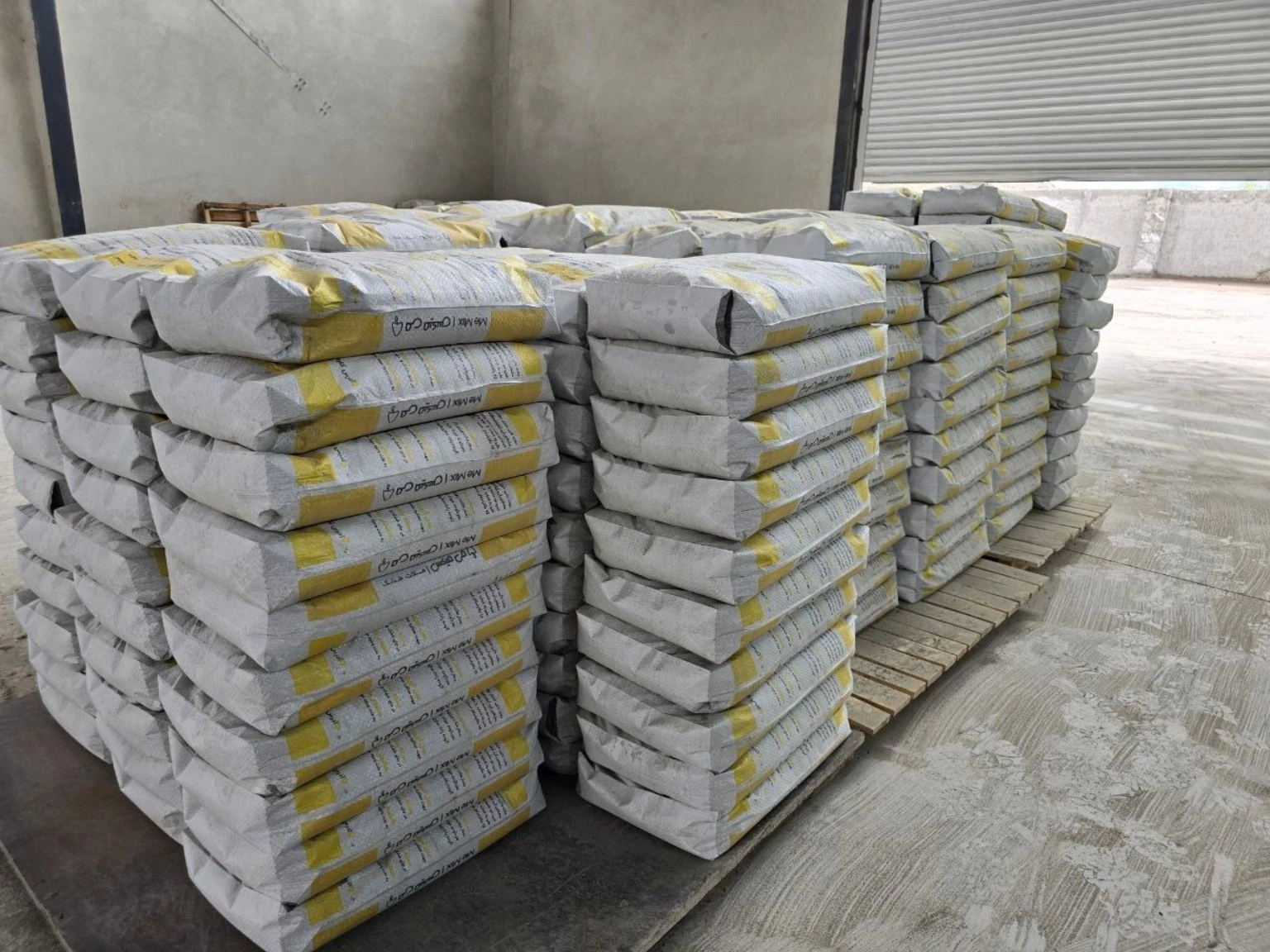
Dry-mix mortar prepared for export with controlled pallets, storage condition and commercial traceability.
The HKT commercial team keeps batch identity, packaging condition, pallet security and technical information connected so buyers can source dry-mix mortar with fewer handling risks.
road transport is practical for regional markets; containerized sea freight can serve farther destinations when order volume supports it. Payload, pallet count and moisture risk are planned together.
Dry mortar is dense, moisture-sensitive and normally palletized, so container payload and bag protection dominate logistics. A 20 or 25 kg bag may appear simple, but pallet pattern, stretch wrapping, liner quality and total gross weight determine whether the cargo arrives usable. HKT Export checks how many bags and pallets fit within carrier limits and whether mixed products can be loaded without creating unstable stacks. Sea freight through southern ports can serve distant markets, while road transport may suit regional distributors. Warehousing conditions at destination are also relevant because the product must stay dry through the entire route and shelf-life period. The cheapest bagging option is not commercially cheap if moisture damage or torn bags create claims.
Frequent risks in this category include treating all dry mortar as interchangeable, failing to define substrate and layer thickness, buying on cement content alone, ignoring shelf life, weak bag protection and selecting a formula that performs well in the factory climate but is unsuitable for the destination environment.
HKT Export can help a mortar buyer move from an application requirement to a product that can be quoted and tested. Hamed Khodabakhshi can coordinate manufacturer selection, product classification, TDS review, sample or trial requests, bag format, private-label questions and pallet data. If the buyer needs several products—such as tile adhesive, grout and repair mortar—the team can compare whether one producer can supply a coherent range or whether separate sources are commercially stronger. The aim is to make the order understandable at both the technical and distributor level, with performance claims tied to manufacturer evidence and packaging tied to the actual export route.
Factory-produced dry mortar can give distributors and project buyers more predictable batching, packaging and application control than site-mixed alternatives, but the correct product must be matched to the job. International buyers may be sourcing masonry mortar, bricklaying mortar, wall-covering mortar, plastering products or polymer-modified dry mixes, each with different performance and substrate requirements. HKT Export helps buyers compare Iranian dry mortar manufacturers according to application, strength or performance target, bag size, formulation documentation, production capacity, storage conditions and export packing. Hamed Khodabakhshi and the HKT sourcing team connect the technical inquiry to commercial negotiation, samples where required, quality checks, palletization and freight planning. A buyer looking for an Iranian dry mortar supplier or ready masonry mortar exporter therefore receives a structured sourcing route rather than a list of factories. The objective is repeatable material, suitable documentation and a shipment format that can be received and distributed efficiently at destination.
Dry-mix mortar: formulation, substrate and site method
Dry mortar is a formulated system, not simply cement and sand in a bag. Tile adhesive, masonry mortar, render, grout, repair mortar and leveling products have different binder, aggregate and additive requirements. Procurement should begin with substrate, tile or block type, layer thickness, indoor or outdoor exposure, temperature range and expected site method. The data sheet should be read for mixing water, pot life, open time, curing and application limitations, while the project consultant may require independent test evidence. Packaging should protect against humidity and carry batch identification. For export, remaining shelf life at destination is a commercial requirement and should be agreed before production. A shipment that arrives with too little usable shelf life can be technically compliant at departure but commercially unacceptable to the buyer.
Iranian Construction Chemicals — Admixtures, Waterproofing, Grouts & Epoxy
Iranian concrete admixtures, waterproofing materials and specialist construction chemicals.
Iranian construction-chemical producers can offer admixtures, waterproofing materials and related products with product-specific technical documentation, but the evidence must be checked for the exact formulation being quoted. Selected admixtures may be documented against Iran National Standard 2930, EN 934 classes, ASTM C494/C494M or other applicable requirements depending on product and producer. HKT Export uses current technical data sheets, safety data sheets, test evidence and batch or product identification as part of supplier qualification rather than treating a catalogue claim as proof. For an international buyer, country of origin by itself is not a purchasing specification.

Construction chemicals, admixtures and waterproofing products sourced as technical systems for project use.
Hamed Khodabakhshi and the HKT sourcing team review function, dosage logic, shelf life, packaging and project compatibility so buyers can source Iranian construction chemicals more professionally.
Construction-chemical procurement requires the exact chemistry and application to be defined before price comparison. Water reducers, PCE superplasticizers, accelerators, retarders, waterproofing systems, bonding agents, grouts, repair products, curing compounds, sealants and adhesives can differ widely in solids content, dosage, substrate compatibility, shelf life and transport requirements. The RFQ should include product function, performance target, relevant standard or consultant requirement, package size, quantity, destination climate, required TDS/SDS and any sample or compatibility test.
For construction chemicals, dosage and compatibility can be more important than price per kilogram. A superplasticizer with a higher unit price may be commercially better if the required dosage is lower or if it delivers the specified slump retention with the buyer’s cement. Waterproofing and bonding products must be matched to substrate, exposure and application method, while epoxy and repair systems can be sensitive to temperature, mixing ratio and surface preparation. Shelf life at the expected arrival date should be checked, not only at the factory dispatch date. Packaging may also affect freight or dangerous-goods handling for certain formulations. HKT Export therefore asks for the technical and safety data needed to compare total use cost, storage risk and project suitability, and recommends project trials when compatibility cannot be established confidently from documents alone.
Construction-chemical sourcing requires more technical scrutiny than a simple factory directory can provide. HKT Export reviews the manufacturer’s formulation focus, laboratory support, product-specific TDS and SDS, batch identification, shelf life, packaging and the ability to discuss compatibility with the buyer’s cement, substrate or application. A company may be strong in polycarboxylate superplasticizers but less relevant for waterproofing membranes or epoxy flooring; another may have a broad catalogue but limited export documentation. The shortlist is therefore built around the exact product function and evidence required. When a manufacturer cites EN, ASTM or Iranian standards, HKT asks for the current documentation for the quoted product rather than assuming that every item in the range carries the same classification.
Construction chemicals can be liquids, powders, pastes or multi-component systems, so freight planning begins with the current SDS and packaging specification. Liquid admixtures may move in drums, jerrycans or IBCs; powders can use bags or pails; epoxy and specialty products may have separate component packaging. Leakage prevention, pallet stability, storage temperature and shelf life can matter more than container utilization. If a product is classified for regulated transport, the carrier’s requirements must be followed. HKT Export checks the proposed package and route before booking, because a freight method suitable for ordinary dry materials may not be appropriate for a chemical formulation. The exact transport status always comes from the manufacturer’s documentation for the product being shipped.
Concrete admixtures, waterproofing materials and specialist construction chemicals are specification-sensitive products, so international procurement should be based on application and performance rather than a generic product label. Buyers may need water reducers, superplasticizers, accelerators, repair products, grouts, waterproofing systems, construction adhesives or related materials, with each formulation requiring its own technical data, dosage guidance, packaging and storage conditions. HKT Export helps foreign buyers compare Iranian construction-chemical manufacturers and export-ready suppliers against the real project requirement. Hamed Khodabakhshi and the HKT sourcing team coordinate technical clarification with producers, commercial negotiation, samples or trial quantities where justified, documentation, leak-resistant packing, palletization and freight planning. A buyer looking for an Iranian concrete admixture supplier, waterproofing-material exporter or construction chemicals source can therefore keep technical evidence and commercial execution inside the same sourcing process. The goal is not to add more product names to a catalogue; it is to select a formulation and producer that can support a dependable professional transaction.
NSG construction additives and waterproofing reference
For orders that specify NSG products, HKT Export can link the technical line item to the NSG official website and record the exact product code rather than using “NSG additive” as a vague description. NSG presents construction resins, waterproofing materials and concrete or mortar additives; the selected product therefore has to match the intended use, substrate and project method. The order should state pack size, quantity, batch traceability and remaining shelf life. If a project uses several NSG components, the system sequence should be documented so procurement does not accidentally mix incompatible or unnecessary products. Any claim about performance should be tied to the manufacturer’s current technical documentation and, where required, verified through project trials.
Waterproofing systems: interfaces are part of the product
Waterproofing failures often occur at interfaces rather than in the main field area. Procurement therefore needs to account for joints, penetrations, corners, movement zones, drainage points and protection layers. The RFQ should identify whether the solution is positive-side or negative-side waterproofing, cementitious, resin-based, membrane-based or another system. Surface preparation requirements must be realistic for the project; a high-performance coating cannot compensate for contaminated, unstable or excessively wet substrate unless the system is designed for it. The commercial scope should clarify which primers, tapes, meshes, sealants and protective layers are included. Mock-up application is valuable when the project team has not used the system before. Packaging dates and storage temperature need attention because many liquid products are more sensitive than mineral materials.
Construction chemicals: admixtures must be matched to the concrete system
Concrete admixtures and waterproofing chemicals should not be bought by a generic label such as “superplasticizer” or “waterproof additive.” The buyer should define the function required and the concrete or mortar system in which the product will be used. Cement source, supplementary materials, aggregate grading, temperature, mixing sequence and transport time can influence performance. Trial mixes are recommended when dosage or compatibility is critical. The procurement package should identify product code, batch number, recommended dosage range, packaging, storage conditions and shelf life. Safety data and handling instructions should be included where applicable. For waterproofing, the complete system may require primer, membrane, reinforcement, joint treatment and protective layer; buying one component without the rest can produce a failure that is not a product defect.
Buying Construction Materials from Iran: RFQ, Pricing, Quality, Incoterms & Logistics
Start with a procurement brief, not a supplier list
International buyers often lose time by asking a broad question such as “send your best price for construction materials.” A supplier can answer that request, but the answers will not be comparable. One factory may quote a lower grade, another may exclude packing, a third may assume local delivery, and a fourth may quote a product that looks similar but follows a different technical standard. A better starting point is a procurement brief.
Build the RFQ around measurable requirements
An RFQ should make the commercial comparison measurable. For natural stone, this can mean quarry or commercial stone name, slab or block format, thickness, finish and visual range. For tiles, it can mean body type, size, surface, rectification and packing.
Supplier verification should match the risk of the order
Verification is not one universal checklist. A small sample order and a multi-container project do not carry the same commercial risk. Basic checks can include company identity, production location, product range, export history where available, current quotation details and the ability to provide technical documents.
Compare Iranian quotations on a like-for-like basis
A quotation comparison should normalize the commercial scope before price is ranked. Unit of measure, grade, dimensions, quantity, packaging, loading point, Incoterm, tax or export assumptions, validity and delivery time should all be aligned. In stone, one supplier may quote per square metre and another per ton.
Use samples and pre-production approvals intelligently
Samples serve different purposes by category. Stone and tile samples help confirm appearance, color, finish and surface quality. Dry mortar and construction chemicals may require application trials or laboratory evaluation.
Define inspection before production, not at the loading gate
Inspection works best when the acceptance criteria are agreed before the product is made. The purchase order can state what will be checked, sampling level, test method, allowed tolerance and who has authority to release the cargo. Visual inspection may be enough for some low-risk characteristics, while structural steel, cement, gypsum or construction chemicals may require documentary and laboratory evidence.
Packaging is part of product quality
Export packing is not a decorative final step. It affects breakage, moisture exposure, loading efficiency, unloading and claims. Stone slabs may require A-frames or reinforced bundles; tiles need cartons and pallets that protect edges and faces; rebar requires secure bundles and clear tags; pipes need loading that protects sockets and avoids deformation; cement, gypsum and mortar need moisture-resistant bagging and pallet protection; construction chemicals need containers compatible with the formulation and transport conditions.
Documentation should mirror the physical cargo
The commercial invoice, packing list, certificate of origin, transport document and technical evidence should describe the same product and quantities. Mismatches between invoice description, packing count, bundle tags, pallet labels or mill documents can create customs questions and receiving problems. For construction materials, the technical file may also include mill test certificates, certificates of analysis, technical data sheets, safety data sheets, inspection reports, laboratory results or declarations requested by the buyer.
What to include when requesting a quote from HKT Export
For the fastest useful response, send the product name, specification or datasheet, quantity, destination, preferred Incoterm, required delivery date and any mandatory documents. For stone, include material, form, thickness and finish. For tile, include size, body, surface and model or design direction.
Engineering-grade procurement notes for Iranian construction materials
Construction-material procurement becomes reliable only when the commercial offer is tied to measurable technical requirements. HKT Export therefore treats the product name as the beginning of the specification, not the specification itself. A usable RFQ should identify the intended application, project environment, applicable drawings, target performance, dimensions, finish, packaging, inspection level, delivery sequence and destination conditions. The purpose is to prevent a quotation from being “cheap” merely because a supplier has silently reduced grade, thickness, tolerance, packing strength or documentation. For repeat orders, the same logic is used to create a stable reference: approved sample, approved data sheet, approved manufacturer, batch identification and acceptance criteria are recorded together. This creates a procurement trail that can be audited before loading rather than explained after arrival.
Technical submittals before price comparison
Before comparing suppliers, the technical submittal should be complete enough to prove that two quotations describe the same material. Depending on the product, this can include data sheets, declared composition, nominal dimensions, tolerance ranges, test reports, color or finish references, packaging configuration, production date coding, certificates of analysis, mill certificates and installation recommendations. The buyer should also distinguish between manufacturer data and trader-generated descriptions. Manufacturer documentation carries greater weight because it is linked to a production system and a defined product code. Where a project consultant or contractor has a formal submittal procedure, the material should not be released for mass production until the exact brand, model, grade and sample status are frozen. This discipline reduces substitution risk and avoids disputes about what was originally offered.
Supplier qualification: factory capacity is not the same as order readiness
A factory can have modern equipment and still be a poor fit for a specific order if its current line schedule, tooling, raw-material access or quality system does not match the project. Supplier qualification should therefore combine company review with order-specific verification. HKT Export checks whether the requested specification is a routine production item or a special run, what minimum quantity applies, how production lots are identified, what internal tests are performed and whether the supplier can produce the required documents in the buyer’s language or format. For made-to-order items, production lead time should start only after technical approval and deposit conditions are clear. This prevents the common misunderstanding where “factory capacity” is quoted as if it were immediate stock availability.
Inspection planning: define hold points before production
Inspection is most effective when the buyer decides in advance what must be witnessed and what evidence is sufficient. A practical inspection and test plan can include incoming material verification, first-off sample approval, in-process dimensional checks, batch testing, pre-packing inspection and loading supervision. Not every order needs every hold point; the level should reflect technical and commercial risk. High-value facade stone may justify detailed piece mapping, while a standard bagged material may need batch and packaging checks. Acceptance criteria should be written before inspection so the inspector does not invent thresholds on site. Photographs should include product identification and scale where useful. Any nonconformity should be recorded with quantity affected, disposition and buyer approval before the shipment is closed.
Sampling: make the sample represent the lot
A beautiful sample can mislead if it is not representative of production. Sampling rules should specify where samples are taken, how many, and whether they represent appearance, mechanical performance or both. For natural materials, an approved range may be more realistic than one piece. For tiles, multiple cartons from different pallet positions can reveal shade or caliber variation. For bagged powders, sealed retention samples can be kept from each lot in case later testing is required. For chemical products, samples should retain batch labeling and storage history. The buyer and supplier should agree whether destructive testing reduces saleable quantity and how replacement is handled. A retention sample is especially valuable in repeat supply because it provides a physical bridge between the first approved shipment and later production.
Packaging engineering for export cargo
Export packaging must be designed for the full route, not just movement from factory to truck. Stone needs strong crates and secure separation; tiles need pallet stability and corner protection; pipes need bundling that avoids crushing; bagged cement, gypsum and mortar need moisture protection; liquid chemicals need compatible containers, caps and secondary protection against leakage. The package should also match destination handling equipment. Oversized pallets may look efficient at origin but become difficult to unload at a small warehouse. Marking should include product code, quantity, batch or production reference, gross and net weight where relevant, and handling symbols. If wooden packing is used, destination phytosanitary requirements should be checked before dispatch. Container loading photographs provide useful evidence of condition and securing.
Container loading, weight distribution and condensation risk
Dense building materials can reach weight limits long before a container is full by volume. Load planning therefore needs verified product weight, pallet or crate dimensions, container payload, road restrictions and axle considerations. Heavy items should be distributed to avoid dangerous concentration. Mixed cargo requires special care because hard, dense products can crush lighter cartons or damage chemical containers. Desiccants and ventilation strategy may be appropriate for moisture-sensitive cargo, but they should be selected with the actual route and packaging system in mind. For tiles and stone, empty spaces should be controlled so pallets cannot move under braking or sea motion. A packing plan prepared before the truck arrives reduces re-handling, damage and demurrage and gives the buyer a more credible estimate of landed cost.
Commercial documents and technical documents must agree
Many export delays are caused not by the material itself but by inconsistent paperwork. Product descriptions, quantities, weights, country of origin, manufacturer details and packing numbers should align across quotation, proforma invoice, commercial invoice, packing list, certificates and transport documents. Technical documents should use the same product code that appears on cartons or bundle tags. If a buyer needs a certificate of origin, test certificate, conformity statement or legalized document, the requirement should be known before shipment rather than after the vessel departs. HS classification should be reviewed product by product because “construction material” is too broad for customs purposes. Accurate documentation also supports warranty and claim handling because the exact batch and shipment can be identified later.
Incoterms and landed-cost comparison
An Incoterm does not by itself define every cost or operational responsibility. The quotation should identify the named place or port and make clear which inland transport, terminal handling, export clearance, freight, insurance and destination charges are included. Buyers comparing EXW, FCA, FOB or delivered options should normalize the offers to the same cost point. For heavy materials, a small difference in inland distance or port handling can outweigh a factory-price advantage. HKT Export can build a cost model by shipment so the buyer sees product cost, packing, inland movement, export formalities and main transport separately. This transparency is useful for negotiations because it shows whether savings should be pursued at the factory, in packaging, through consolidation or by changing the logistics route.
Contract controls for substitutions and changes
Construction projects are vulnerable to silent substitution. Purchase orders should therefore identify which attributes are frozen and what requires written approval. Manufacturer, factory, grade, size, thickness, color, finish, formulation, packing size and certificate source may all be controlled depending on the material. If a supplier proposes an alternative because of stock or production constraints, the proposal should show the technical difference and commercial effect. Verbal approval is risky for multilingual export projects; a short written approval linked to the revised data sheet is better. The same rule applies when production changes occur after the first shipment. Repeat business should not assume that an unchanged brand name guarantees unchanged raw materials, formula or manufacturing line, so critical parameters are rechecked.
Repeat-order consistency
Repeat orders should reference the approved history instead of starting from zero. The file can include prior product code, manufacturer, approved sample, key test data, batch photographs, packing configuration and any site feedback. Before a repeat shipment, the supplier confirms whether formulation, raw material, tooling, production line or packaging has changed. For decorative materials, color and finish should be compared again because natural and fired products can vary. For chemicals, shelf life and current technical data should be rechecked. For steel or cementitious products, current certificates belong to the new batch even if the previous shipment was satisfactory. This approach turns continuity into a controlled process rather than an assumption and helps distributors maintain a stable market offer.
Project value engineering without degrading the specification
Cost reduction is most useful when it removes unnecessary cost while preserving required performance. Examples include optimizing stone dimensions to improve slab yield, selecting a tile size with better production availability, rationalizing rebar lengths to reduce cutting waste, adjusting packaging to improve container utilization, or choosing a construction chemical system that achieves the required result with fewer incompatible components. Any value-engineering proposal should show what changes, what does not change, the technical basis and the delivered-cost effect. This is different from downgrading quality without disclosure. HKT Export can present alternatives side by side so the buyer, consultant or contractor can approve a change with a clear record of the trade-offs.
Site interface: procurement should anticipate installation
Good material can perform poorly if the site interface is ignored. Procurement should therefore capture practical installation requirements that affect ordering: recommended joint width for tiles, substrate tolerance, stone anchoring or fixing method, curing and storage for cementitious products, pipe joining tools, mixing equipment for dry mortar, and application temperature for chemicals. Accessories should be considered at the same time as the main product. The buyer should also confirm who is responsible for shop drawings, method statements and installer training when these are necessary. By linking procurement data to site method, the project reduces emergency purchases and arguments about whether a problem was caused by material, design, storage or workmanship.
Buyer checklist before issuing a purchase order
- Identify the exact product family, end use and project location.
- Freeze manufacturer and model where a named brand is required.
- State grade, size, thickness, finish and tolerance where relevant.
- Attach approved drawings, samples or color references to the order record.
- Define test reports, certificates and language required for technical documents.
- Record batch, heat, shade, caliber or production code according to product type.
- Specify packaging unit, pallet or crate configuration and export protection.
- Agree remaining shelf life for dry mixes, chemicals and other dated materials.
- Clarify whether inspection is visual, dimensional, documentary or laboratory-based.
- Set written acceptance criteria before the inspector visits the factory.
- Prohibit unapproved substitutions of factory, grade, formula or model.
- Confirm spare quantity for cutting, breakage and project maintenance.
- Check container payload and road limits for dense materials.
- Plan moisture and condensation protection for sensitive cargo.
- Confirm destination handling equipment and maximum pallet dimensions.
- Align product codes across cartons, packing list, invoice and certificates.
- Confirm Incoterm together with the named place or port.
- Separate product price from packing, inland transport and export charges.
- Agree the claim procedure before shipment rather than after a problem occurs.
- Keep retention samples when batch consistency is commercially important.
- Document loading with photographs showing identification and securing.
- Recheck critical data for every repeat order, even under the same brand.
- Confirm whether installation accessories are included or excluded.
- Record who approves technical changes during production.
- Do not release final payment milestones until agreed evidence is available.
Brand references are procurement controls, not advertising labels
Takceram, Alborz Ceramic, Jabal Gypsum and NSG are included here because a named source can reduce ambiguity when the buyer intentionally specifies that manufacturer. The link is a reference point for current manufacturer information, not a promise that every catalog item is continuously available or automatically suitable for every project. HKT Export therefore confirms the current product code, production status, technical data, packaging and commercial availability for the actual order. If a distributor or project requires an exact manufacturer, that requirement is written into the procurement file and substitution is blocked without buyer approval. If the buyer is open to alternatives, the alternative is presented transparently with its own data rather than being passed off as the originally named product.
Tell Hamed Khodabakhshi what your project needs.
Send the material, technical specification, grade or standard, quantity, destination, delivery timing and any target commercial range already known. HKT Export can then evaluate suitable Iranian manufacturers, current availability, inspection needs, export packing and the most practical road, air or sea freight route.
Send your construction-material requirement →